SSM Health's Nurse Influencers Cut Hiring Time by 70% and Saved $190 Million on Travel Staff
A team of five nurse influencers has transformed recruitment at SSM Health. The St. Louis-based health system now hires nurses in 22 days instead of 75. And its travel nurse spending has dropped from $305 million to a projected $115 million this year.
The strategy started almost by accident in 2022. Now it serves as a blueprint for hospitals struggling to fill nursing positions in a tight labor market.
The Problem: Slow Hiring in a Shortage
Before the program launched, SSM Health faced several recruiting challenges. The system operates 23 hospitals across Oklahoma, Missouri, Illinois, and Wisconsin. Getting an offer out to a nursing candidate could take months.
The application process was clunky. Job postings barely showed up in online searches. Applicants waited weeks just to get an interview scheduled. And nonclinical recruiters couldn't answer basic nursing questions about patient ratios or career growth.
"That was truly one of those moments where you pull the thread on the sweater and the whole thing unravels," said Seth Lovell, BSN, RN, system vice president of nursing transformation and innovation.
The U.S. Bureau of Labor Statistics projects demand for registered nurses will grow 6% through 2033, with roughly 194,500 job openings each year. Federal data from the Health Resources and Services Administration shows a national deficit of nearly 296,000 nurses. Hospitals everywhere are competing for a limited pool of talent.
Why Social Media?
SSM Health's leadership noticed another problem. Without a voice on social media, the system had little control over its online reputation. Platforms tend to boost negative reviews because angry posts generate more engagement.
"Some of these popular social media platforms can be controversial from a professional perspective," said Amy Wilson, DNP, RN, chief nurse executive of SSM Health. "And our perspective was that if we wanted to engage a modern workforce, then we had to have a modern message."
That decision to meet nurses where they spend their time appears well-timed. Research from ShiftKey found that 66% of Gen Z workers use social media for career research. About 16% say it's their most influential source of job information.
The study also revealed a troubling pattern. An analysis of nearly 750,000 nursing-related TikTok posts found 64% were negative. Only 36% highlighted the benefits of nursing careers. Gen Zers who decided against nursing reported seeing more negative content than those who entered the field.
How the Program Works
The influencer role takes different forms at SSM Health. One primary influencer spends about 20 to 25 hours weekly on recruitment tasks. Another 15 to 20 hours go toward creating and editing content.
Some full-time bedside nurses create videos on top of their regular shifts. Others work one or two clinical shifts per week while dedicating 12 to 16 hours to content creation with some recruitment duties.
The team posts across five platforms: TikTok, Instagram, Facebook, YouTube Shorts, and LinkedIn. Every piece of content goes through an approval process. Reviewers make sure posts fit the Catholic health system's values and don't accidentally show patient information.
Dr. Wilson said the goal is authenticity, not clickbait.
"We're not painting everything rosy," she said. The content shows both the rewards and challenges of nursing work.
What makes this approach different is the direct connection. Nurse influencers respond to comments and direct messages in real time. They text candidates instead of relying on back-and-forth emails. They can answer the specific questions that prospective hires actually care about.
The Numbers Tell the Story
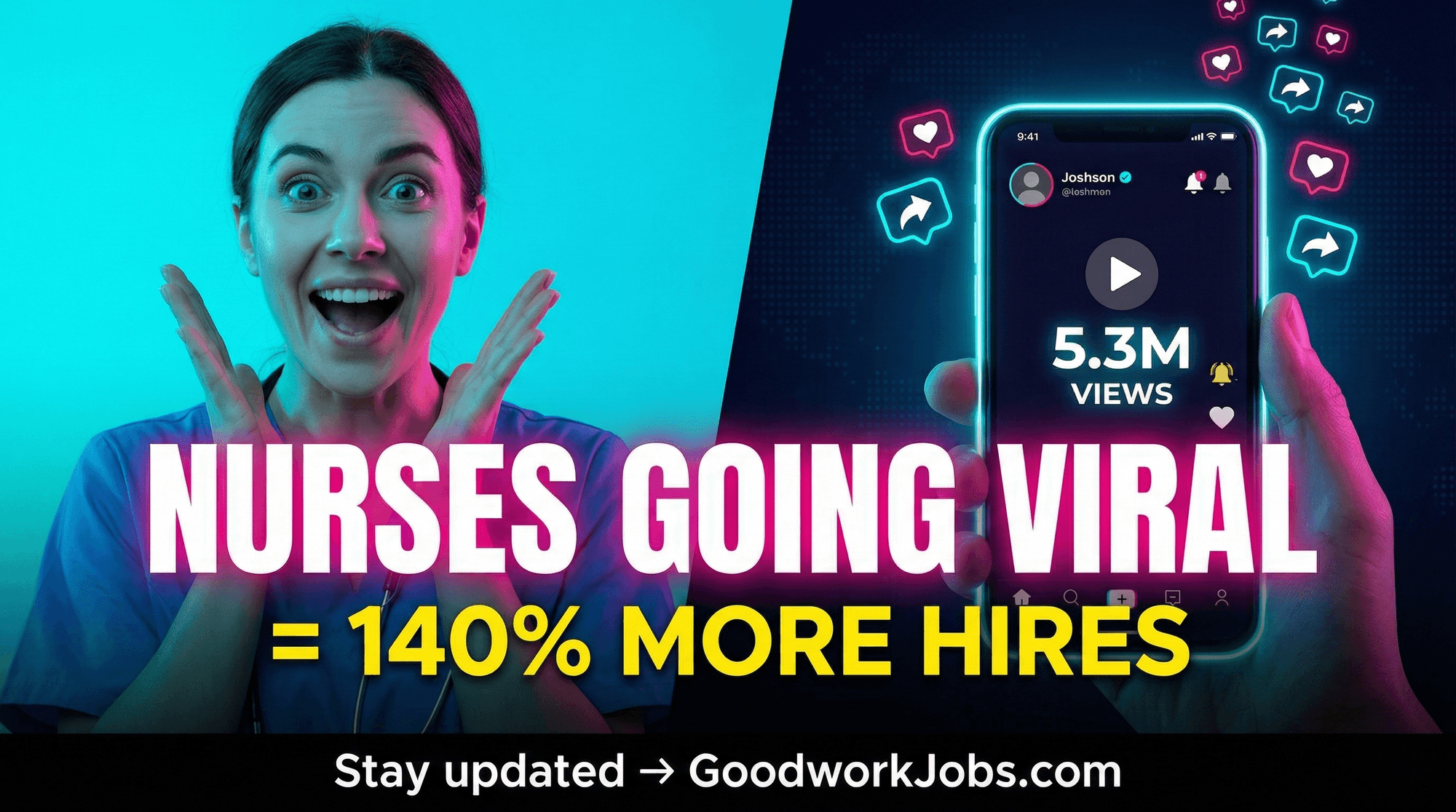
The results have been striking. Between 2022 and 2023, SSM Health increased RN hires by 140%. Compared to its 2022 baseline, hires were up 109% in 2024. Through June 2025, they've climbed 128%.
The percentage of nurses in full-time or part-time roles (rather than temporary positions) rose from 63% in 2022 to 78% today.
Speed improved dramatically. Time to fill a position dropped from 75 days to 22 days, a 70% reduction. Total time to hire fell from 133 days to 50 days.
As of mid-July, the social media effort had generated 122 million views, 3 million engagements, and 3,800 short-form videos. The system now has 70,000 followers across its five platforms.
SSM Health's engagement rate of 2.1% beats the healthcare industry average of 1% to 1.5%.
Cost Savings on Travel Nurses
Perhaps the most significant impact shows up in the travel nurse budget. In 2022, SSM Health spent $305 million on travel and agency staff. That dropped to $200 million in 2023 and $149 million in 2024. This year's projection falls between $115 million and $120 million.
That matters because travel nurses cost hospitals significantly more than permanent staff. According to research from Staffing Industry Analysts, the travel nursing market ballooned from $6.5 billion in 2019 to $42.7 billion in 2022 during the pandemic. While costs have since moderated, travel contracts still run far above typical staff pay.
Hospitals have strong financial incentives to build permanent teams. An American Hospital Association report found that some facilities were spending over 38% of their nursing labor costs on travelers at the pandemic's peak.
What Went Viral
The program has produced 75 viral posts and 32 super-viral posts (defined as reaching more than 1 million impressions). One video crossed into "mega-viral" territory with over 7.7 million views.
That top performer? A 26-second TikTok about day shift versus night shift nurses.
"I'm day shift. I get all of the DAISY Awards," one nurse says in the video. "We're night shift. We get leftover pizza," her colleague replies.
The video played part of Taylor Swift's "Cruel Summer" and tapped into a broader social media trend, giving it extra reach.
Advice for Other Health Systems
For hospitals considering this approach, SSM Health's leaders recommend starting with alignment. Make sure the strategy fits your organization's mission and values.
Getting nursing leadership on board early is essential. Lovell said some initial pushback came from leaders worried about losing control of hiring decisions.
But three of the five nurse influencers were most recently nurse managers. By taking on recruitment tasks, they've actually given time back to leaders who had been stretched thin.
"That was definitely an unexpected benefit that is really being magnified within the organization," Dr. Wilson said. "The trust that's been able to be developed amongst nurse leaders, the time given back to them."
The goal now is to get new nurses onboarded within three to four days of receiving an offer. In an industry where qualified candidates often juggle multiple opportunities, speed can make the difference between landing a hire and losing one.
🤔 Healthcare workers, has your employer tried social media recruiting? What would make you trust (or distrust) an organization's online presence?
Sources
- Becker's Hospital Review: The influencers behind SSM Health's nurse hiring boost
- Healthcare Finance News: Social media deterring new nurses from entering the field
- Healthcare Brew: From pandemic boom to post-Covid reality: The future of travel nursing
- American Nurses Association: The State of the Nursing Workforce
Ready for a healthcare job search that respects your time? At Goodwork, we believe nurses deserve transparency, not ghosting. Browse jobs with real pay details and requirements upfront. Explore opportunities at Goodwork